Church Planting
"And I tell you, you are Peter, and on this rock I will build my church, and the gates of hell shall not prevail against it" (Matthew 16:18).
1. The Historical Development of Church Planting in Uganda
The history of church planting in Uganda begins in the late 19th century, rooted in a royal invitation that would alter the spiritual landscape of East Africa. In 1875, Kabaka Mutesa I of Buganda, influenced by the explorer Henry Morton Stanley, sent a letter to Queen Victoria inviting Christian missionaries to his court. This invitation led to the arrival of the Church Missionary Society (CMS) from England in 1877 and the Catholic White Fathers from France in 1879. These early missionaries did more than introduce Christianity—they established a literacy movement that intertwined faith with education. By translating the Bible into Luganda and teaching reading and writing, they created a generation of “abasomi” (readers), making Christianity a vehicle for both spiritual and social transformation.
However, the early years of Christianity in Uganda were marked by persecution and martyrdom. Under Kabaka Mwanga II, dozens of young converts were executed between 1885 and 1887, becoming known as the Uganda Martyrs. Their sacrifice became a turning point, transforming Christianity from a foreign religion into a deeply Ugandan conviction. During this period, the CMS strategically appointed a council of twelve indigenous leaders to oversee the church, ensuring continuity even when missionaries were expelled. This shift toward indigenous leadership laid the foundation for a self-sustaining Ugandan church.
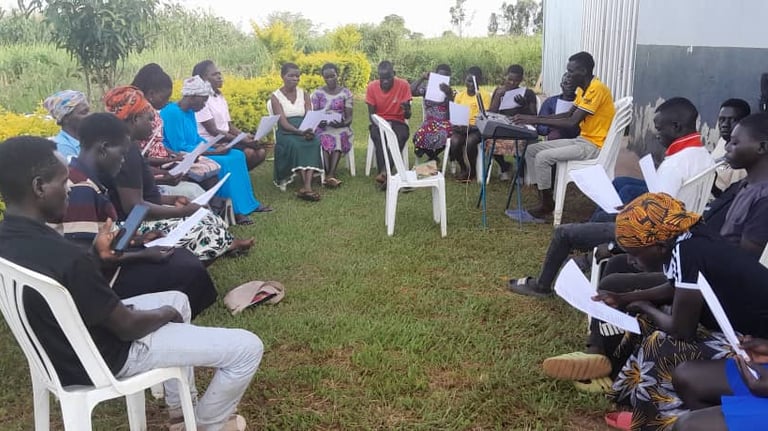
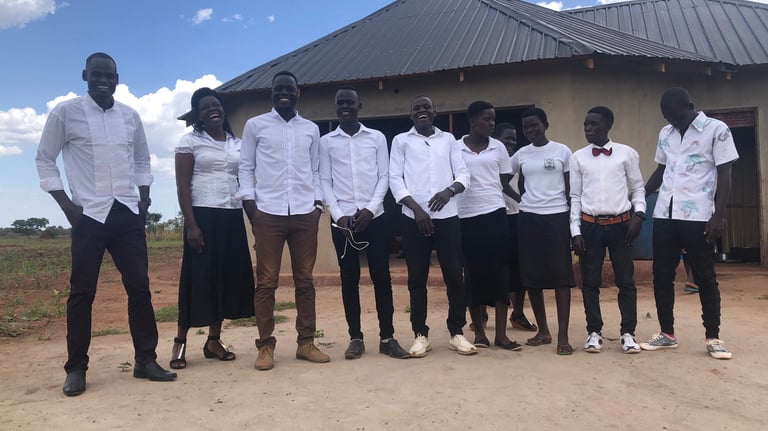
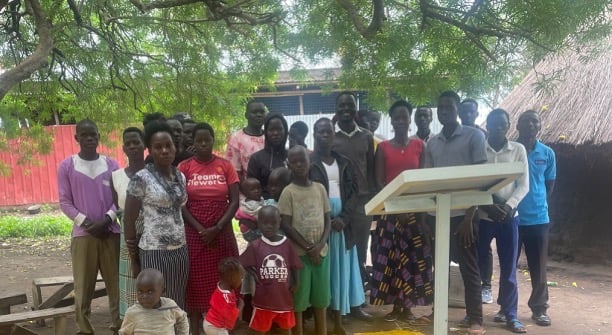
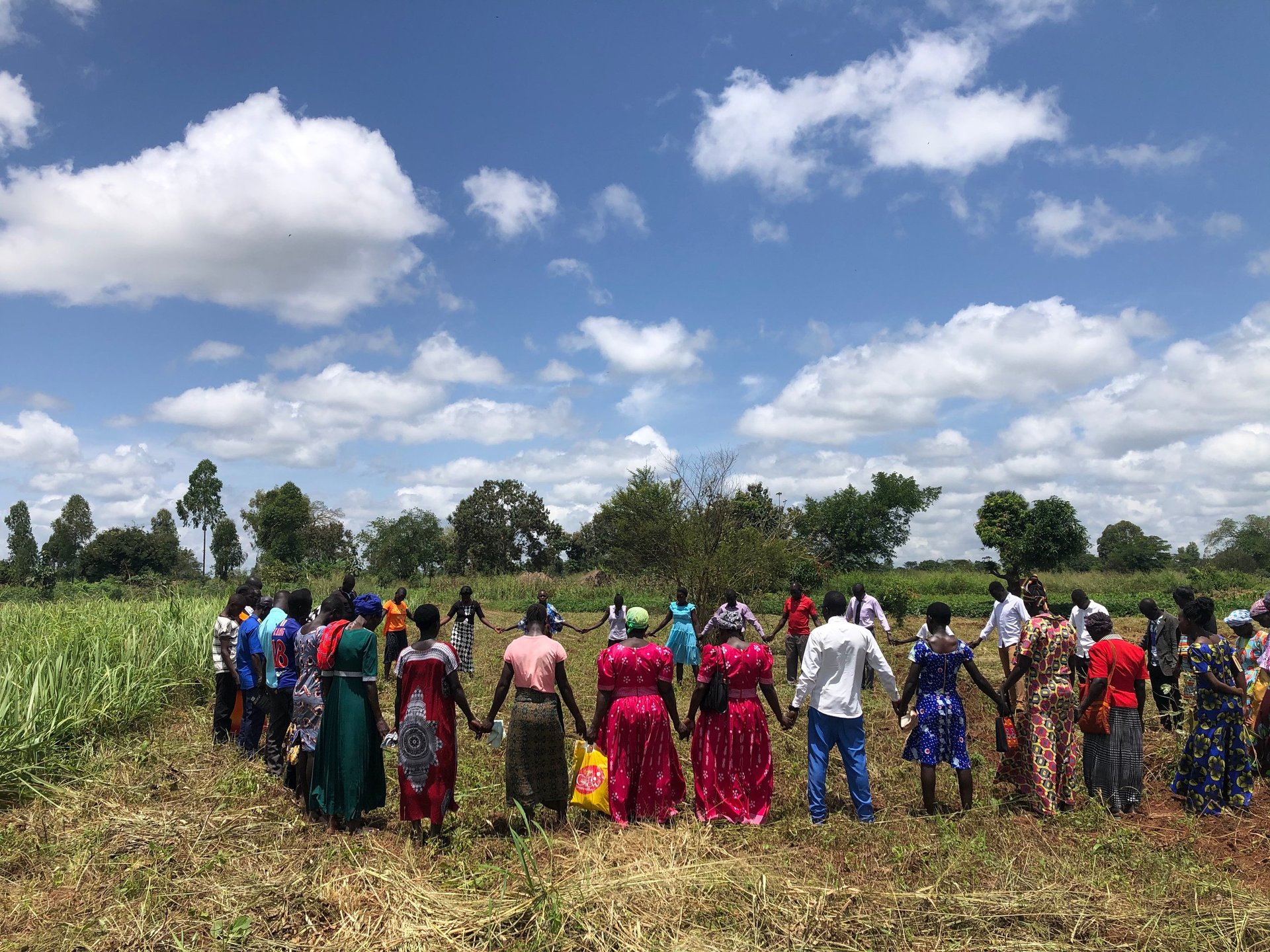
Throughout the 20th century, church planting in Uganda expanded geographically and denominationally. The Anglican and Catholic churches spread into northern and western regions, often relying on local evangelists as the primary planters. The 1930s East African Revival (Balokole) brought a wave of spiritual renewal that emphasized personal conversion and holiness, paving the way for the Pentecostal movements of the 1960s and 1970s. Despite political repression under Idi Amin, Pentecostal churches thrived underground and later flourished openly in the 1980s. Today, church planting in Uganda is characterized by multiplication and indigeneity, with local leaders spearheading new congregations in remote areas. A very small organization like Lubangakene Ministries, for instance, has already planted three churches within five years in Kiryandongo, Oyam, and Nwoya, training leaders who are expected to plant more churches in turn. This model reflects a mature, self-replicating movement rooted in Ugandan soil.
2. The Theological and Missiological Rationale for Church Planting
The theological foundation for church planting is deeply embedded in Scripture. The New Testament portrays missionaries as messengers of the church—tested, equipped, and sent to advance the Great Commission (Acts 13:1–3). Ephesians 4:11–12 identifies evangelists, pastors, and teachers as essential gifts to the church for equipping believers and building up the body of Christ. While apostles and prophets laid the foundation of the faith, evangelists, pastors, and teachers continue the work by proclaiming the Word and nurturing believers. Thus, the vitality of the church depends on these ministries.
Church planting is not merely a pragmatic strategy; it is a biblical mandate. Jesus’ Great Commission (Matthew 28:18–20) calls for making disciples and baptizing them—an act that implies incorporation into a worshiping community. The book of Acts shows that evangelism and church planting were inseparable. The Apostle Paul’s missionary strategy was to plant churches in major urban centers, appoint local elders, and move on once a sustainable community was established (Titus 1:5; Romans 15:19–23). His approach demonstrates that the most effective way to influence a region is through the establishment of local congregations that embody the gospel in their context.
Missiologically, church planting remains the most effective means of evangelism. Studies consistently show that new churches reach new generations, new residents, and new cultural groups more effectively than established congregations. Younger adults, immigrants, and marginalized communities often find it easier to connect with new churches that may be flexible and culturally adaptive. Moreover, new congregations tend to attract a higher proportion of unchurched individuals—up to 80 percent of their members—compared to older churches, which primarily grow through transfers. This dynamic makes church planting indispensable for both frontier missions and the renewal of Christian nations.
3. Global Lessons from Church History
The global history of church planting reinforces these theological truths. In the United States, the 19th and early 20th centuries provide a striking example of how vigorous church planting can transform a nation’s spiritual landscape. In 1820, there was one Christian church for every 875 residents. By 1906, through a sustained wave of church planting, that ratio had improved to one church for every 430 people. During this period, over a third of all congregations were less than twenty-five years old, and the percentage of Americans involved in church life rose from 17 percent in 1776 to 53 percent by 1916. This growth was not driven by mass crusades or institutional programs but by the steady planting of new congregations across expanding communities.
After World War I, however, church planting in the U.S. declined sharply, particularly among mainline denominations. As towns became saturated with churches, older congregations resisted new ones, fearing competition. This resistance coincided with a long-term decline in church attendance and vitality. The historical lesson is clear: when church planting slows, the overall health of the church declines. Renewal and growth require a continual cycle of new congregations that bring fresh energy, leadership, and outreach to the body of Christ.
New churches also play a crucial role in revitalizing older ones. They introduce innovative methods, attract creative leaders, and challenge established congregations to reexamine their mission. In many cases, new churches act as “evangelistic feeders,” producing converts who later join more traditional congregations. This symbiotic relationship demonstrates that church planting and church renewal are not competing priorities but complementary forces that sustain the vitality of the Christian movement.
4. The Ongoing Call to Plant Churches
The lessons from Uganda and global church history converge on a single truth: church planting is essential for both the expansion and renewal of the Christian faith. In Uganda, the movement has evolved from missionary-led efforts to indigenous multiplication, proving that local leadership and contextualized ministry are key to lasting impact. Theologically, church planting fulfills the Great Commission by establishing communities where discipleship and worship can flourish. Historically, it has been the engine of revival and growth in every era of the church.
For the global church today, the challenge is to recover a kingdom-minded perspective—one that rejoices in the growth of God’s kingdom rather than guarding institutional turf. Established churches must see new congregations not as competitors but as partners in mission. As history shows, the health of the church in any nation depends on its willingness to plant new churches continually.
In conclusion, the history of church planting in Uganda and beyond reveals a consistent pattern: wherever the church plants new congregations, the gospel spreads, communities are transformed, and the body of Christ is renewed. The call to plant churches is not merely a strategy—it is a divine mandate that sustains the life and mission of the global church.
Church Gathering Schedules
"not neglecting to meet together, as is the habit of some, but encouraging one another, and all the more as you see the Day drawing near"
(Hebrews 10:25).
Oyam Church
Saturday 2PM
Sunday 9AM.
Karuma Church
Sunday 8AM.
Wednesday 4PM.
Saturday 2PM.
Nwoya Church
Sunday 9AM.